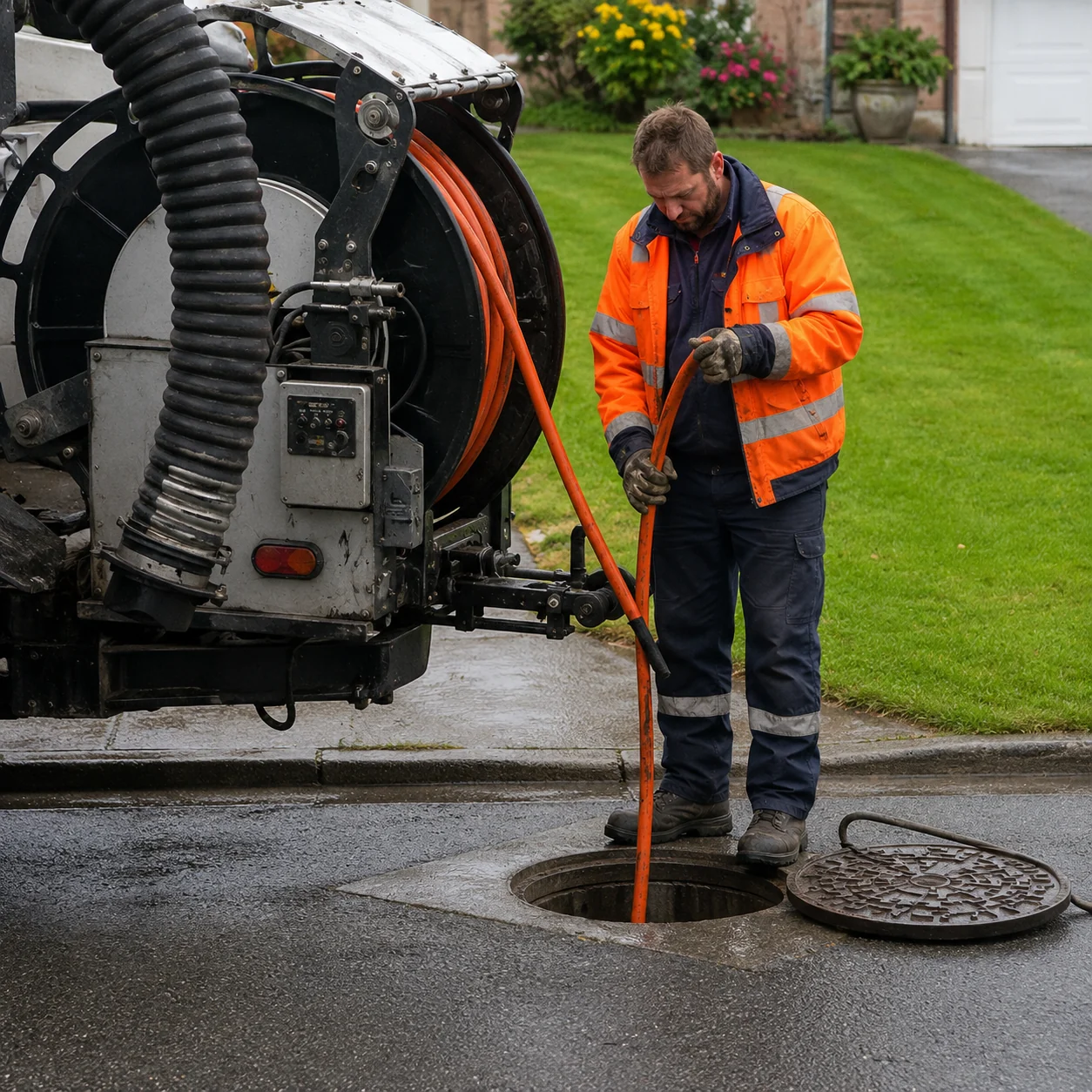
Hydro Jetting Compared With Drain Rodding
Rodding drives a flexible cable through a blockage and opens a channel, quickly and cheaply. Jetting sends water down the line under pressure and scours the pipe wall back to bare surface. Rodding restores flow. Jetting restores the pipe. Old or damaged pipe may tolerate one and not the other.
What rodding is good at
A machine rod reaches a soft blockage fast, costs little, and needs no water supply on site. For a single sink that has stopped, a hairball in a shower waste, or a toilet that has caught something solid, it is the right tool and the job is over in under an hour. What it leaves behind is the coating on the pipe wall.
What jetting is good at
Water at pressure through a rear facing nozzle drives the hose forward while the jets strip the wall behind it. Set fat, silt and scale come off. A cutting head shears roots at a joint. That is why a jetted commercial kitchen line stays open for months rather than weeks. It needs water, access, and a pipe sound enough to take it.
Choosing between them
Ask two questions. Has this line blocked before, and how old is the pipe. A first blockage in modern PVC is a rodding job. A third blockage in the same run, or any blockage in a line that carries restaurant grease, is a jetting job. A cast iron stack of unknown condition is a camera job before it is either.
Common Questions
Is jetting more expensive than rodding?
It usually is, because it takes longer, needs more equipment and a water supply. The comparison that matters is against clearing the same drain three more times, which is where a jetted line often turns out cheaper across a year.
Can jetting damage my pipes?
It can damage pipe that is already cracked, displaced or badly corroded. On sound pipe, at a pressure and nozzle chosen for that material, it does not. The choice of pressure is not automatic and should not be treated as such.
Which one clears tree roots?
Jetting, with a cutting nozzle. Rodding may pass through roots and reopen flow, but it leaves the root mass in the joint, and it grows back into the same place.
Last reviewed